

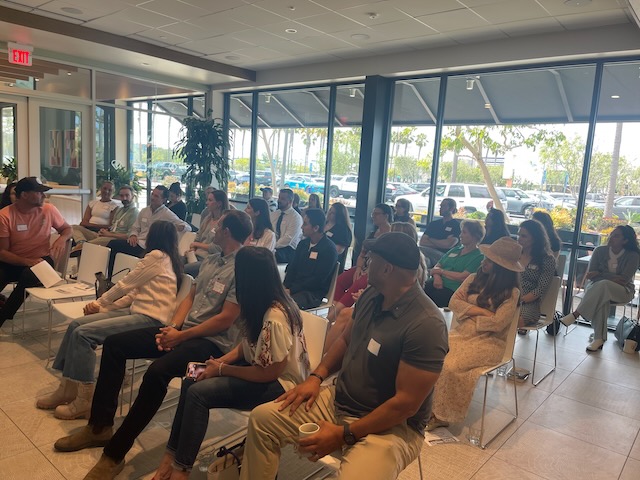
Three months is the perfect window for meaningful transformation. Not too short to be superficial — not so long that momentum fizzles. Here’s how a 90-day wellness program can change the way your team works, communicates, and thrives.
Why 90 Days Is the Sweet Spot
If you’ve been exploring corporate wellness for your team, you’ve probably noticed the options range from a single workshop to sprawling year-long commitments. A 90-day program lands right in the middle — and for most organizations, it’s the most powerful place to be.
Three months is long enough for real habit formation, measurable behavior change, and genuine cultural momentum. It’s short enough to maintain urgency and focus without overwhelming anyone.
Research on organizational change consistently points to quarterly cycles as optimal for transformation. And for workplace wellness specifically, 90 days allows employees to move through the full arc of meaningful change: from initial curiosity and experimentation, through the awkward middle where new practices still feel unfamiliar, to genuine integration where stress-management tools become second nature.
If you’ve started with a single workshop or a four-week mini series, a 90-day program is the natural next step — where the seeds you’ve planted grow deep roots and start bearing real fruit.
The Business Case: Why This Matters
Let’s talk numbers, because wellness isn’t just about feeling good — it’s about performing better.
According to Wellhub’s 2024 Return on Wellbeing Report, 95% of companies that measure their wellness ROI see positive returns, with nearly two-thirds reporting at least $2 back for every $1 invested. Companies with comprehensive wellness strategies see productivity improvements of 20–30% within the first quarter of structured interventions, and 89% of HR leaders report employees taking fewer sick days as a direct result.
The retention impact is equally significant. Research shows that 67% of employees who work for companies with wellness programs plan to stay with their current employer — a number that drops sharply when wellness support is absent. In today’s competitive talent market, a 90-day wellness program isn’t just a nice benefit. It’s a strategic investment.
And the cost of doing nothing? American companies lose approximately $550 billion annually to disengaged employees. Disengaged teams experience higher turnover, more absenteeism, and significantly lower output. A focused quarterly program is one of the most cost-effective ways to move the needle.
What Makes 90 Days Different
Depth Over Breadth
A single workshop plants seeds. A four-week mini series helps them sprout. A 90-day program is where those seeds grow deep roots. Three months allows for progressive skill-building rather than surface-level introduction — employees don’t just learn about stress management, they become proficient practitioners of multiple techniques.
Real Habit Formation
Research shows it takes an average of 66 days to form a new habit, with more complex behaviors sometimes taking significantly longer. Ninety days provides enough repetition and reinforcement that new wellness practices start feeling natural rather than effortful. By day 90, employees aren’t relying on willpower alone — the practices have become part of how they work.
Measurable Business Impact
Unlike shorter programs where benefits may not fully materialize before the program ends, a full quarter allows time to track meaningful metrics: reduced sick days, improved engagement scores, better team dynamics, and shifts in overall morale and productivity.
Cultural Momentum
When an entire quarter is dedicated to employee wellbeing, it signals genuine organizational commitment. Ninety days is long enough for wellness to shift from “that thing HR is running” to “how we actually do things here.”
The 90-Day Blueprint: Month by Month
Here’s how a transformative quarter unfolds, combining clinical hypnosis, EFT tapping, NLP coaching, and group support into one cohesive journey.
Month 1: Foundation & Awareness
Focus: Understanding Stress, Building Core Skills
The first month is about creating a solid foundation. Employees learn what’s actually happening in their bodies and brains when they’re stressed — why current coping mechanisms often fall short, and what becomes possible when they approach stress differently.
Weeks 1–2: Assessment & Introduction
- Individual wellness assessments to identify personal stressors and goals
- Group session: The neuroscience of stress and burnout
- Introduction to hypnosis with a guided group experience
Weeks 3–4: Building the Toolkit
- EFT Tapping workshop: learning the technique and pressure points
- Applying tapping to common workplace stressors — deadlines, conflict, presentations
- Deepening hypnosis practice with a focus on relaxation and mental clarity
- Weekly check-ins to troubleshoot and celebrate wins
By the end of month one, participants typically report feeling more aware of their stress patterns, equipped with at least two powerful tools they can use immediately, and genuinely hopeful that change is possible. The “wow, this actually works” moment usually happens around week two or three.
Month 2: Integration & Application
Focus: Making Techniques Work in Real Situations
The second month is where theory meets practice. Employees take the tools from month one and start applying them to their actual work challenges — difficult conversations, high-stakes presentations, overwhelming workloads, team friction.
Weeks 5–6: Real-World Application
- Coaching sessions (individual or small group) addressing specific workplace challenges
- Advanced EFT protocols for complex emotions and chronic stress
- Hypnosis for building confidence, improving focus, and sharpening decision-making
- Peer support groups where employees share successes and troubleshoot obstacles
Weeks 7–8: Building Resilience
- Emotional intelligence and self-regulation training
- Recognizing early stress signals before burnout sets in
- Cognitive reframing techniques for challenging situations
- Mindfulness practices that complement hypnosis and tapping
Mid-program is often when the real transformation happens. Employees start using techniques proactively rather than reactively — noticing themselves staying calmer in meetings, recovering faster from setbacks, feeling more in control.
Month 3: Sustainability & Leadership
Focus: Creating Lasting Change, Building Wellness Champions
The final month ensures that what’s been built doesn’t fade when the program ends — and empowers employees to support one another’s ongoing wellbeing.
Weeks 9–10: Advanced Practice & Personalization
- Personalized wellness plans tailored to individual needs and goals
- Advanced hypnosis sessions for specific outcomes: better sleep, increased creativity, releasing limiting beliefs
- Training in self-guided tapping and hypnosis for independent practice
- Progress review: tracking improvements in stress levels, sleep quality, and work satisfaction
Weeks 11–12: Integration & Leadership
- Training select employees as “wellness champions” to support peers
- Leadership sessions for managers on actively supporting team wellbeing
- Creating team-specific wellness rituals and practices
- Final group hypnosis session focused on sustained resilience
- Celebration and reflection on individual and collective growth
By the final month, wellness practices feel less like work and more like self-care. Employees have personalized their approach, know what works best for them, and feel confident practicing independently — at work and in life.
What to Expect After 90 Days
Organizations implementing comprehensive quarterly wellness programs typically see results across multiple dimensions:
Employee Health & Wellbeing
- Significant reduction in reported stress levels and burnout symptoms
- Improved sleep quality and energy
- Better emotional regulation and resilience
- A stronger sense of agency over mental health
Workplace Performance
- 20–30% productivity improvement within the first quarter of structured wellness interventions
- Reduction in stress-related absenteeism (companies with robust wellness programs report 28% fewer sick days)
- Improved focus, decision-making, and creativity
- Better conflict resolution and team communication
Engagement & Retention
- Employees in wellness-focused workplaces report significantly higher satisfaction and engagement
- Wellness program participants are substantially more likely to stay with their current employer
- Stronger sense of organizational support and belonging
Team Dynamics
- Enhanced collaboration and psychological safety
- More supportive workplace relationships
- Normalized conversations about mental health
- Increased team cohesion and trust
Who Benefits Most
While any organization can benefit from a 90-day initiative, certain scenarios make the quarterly format particularly powerful:
Mid-sized companies building wellness culture. Organizations with 50–500 employees often find this scale ideal — large enough to create momentum and community, personal enough to feel meaningful.
Teams experiencing chronic stress. High-pressure industries — tech, healthcare, finance, legal — benefit enormously from structured, comprehensive support that goes beyond surface-level interventions.
Companies addressing retention challenges. When turnover is eating into your bottom line and exit interviews cite burnout or lack of support, a 90-day program demonstrates genuine commitment.
Organizations navigating major change. Mergers, restructuring, leadership transitions, or market shifts all create stress. A proactive wellness program helps teams move through uncertainty with greater resilience.
Workplaces where past wellness initiatives fizzled. A focused 90-day approach with clear structure, measurable outcomes, and consistent support can reignite engagement when previous attempts didn’t stick.
Beyond the 90 Days
Here’s the thing about a well-designed quarterly program: the benefits don’t stop when the 12 weeks end.
Research shows that wellness program participants continue making healthier lifestyle choices long after their program concludes. The stress-management tools employees learn in Q1 become tools they draw on all year — and often share with colleagues without any prompting.
Many organizations find that a successful 90-day program naturally evolves into:
- Quarterly wellness programming as standard practice
- Employee-led peer support and wellness initiatives
- Wellness integration into onboarding and professional development
- Ongoing individual coaching for those who want to go deeper
The quarter program isn’t the end of your wellness journey. It’s the foundation one is built on.
Ready to Transform Your Team in 90 Days?
Three months from now, your organization could look and feel completely different. Teams that were burned out could be thriving. Employees who were quietly considering leaving could be re-engaged and invested. A culture of chronic stress could shift into one of resilience and genuine connection.
Every 90-day program is designed around your organization’s specific needs, culture, and goals — blending clinical hypnosis, EFT tapping, NLP coaching, and group support into a comprehensive, progressive journey that delivers results you can actually measure.
Book a Planning Call to talk through your team’s challenges and explore what a quarter program could look like for you.
No pressure, no obligation. Just a conversation.
Pepper Tree Wellness specializes in corporate wellness programs using clinical hypnosis, EFT Tapping, and NLP coaching. Our 90-day transformation programs are designed for organizations ready to make a meaningful investment in their people — with measurable, lasting results. Serving companies throughout Manhattan Beach, the South Bay, and greater Los Angeles, with virtual programs available for remote and hybrid teams worldwide.
Sources:
- Wellhub. (2024). Return on Wellbeing Report. Survey of 2,000+ HR leaders globally.
